Decoding Wagering Requirement Impacts on Retention Rates in Mobile Gambling Applications
Quinn Richter · Nov 1, 2026
Decoding Wagering Requirement Impacts on Retention Rates in Mobile Gambling Applications
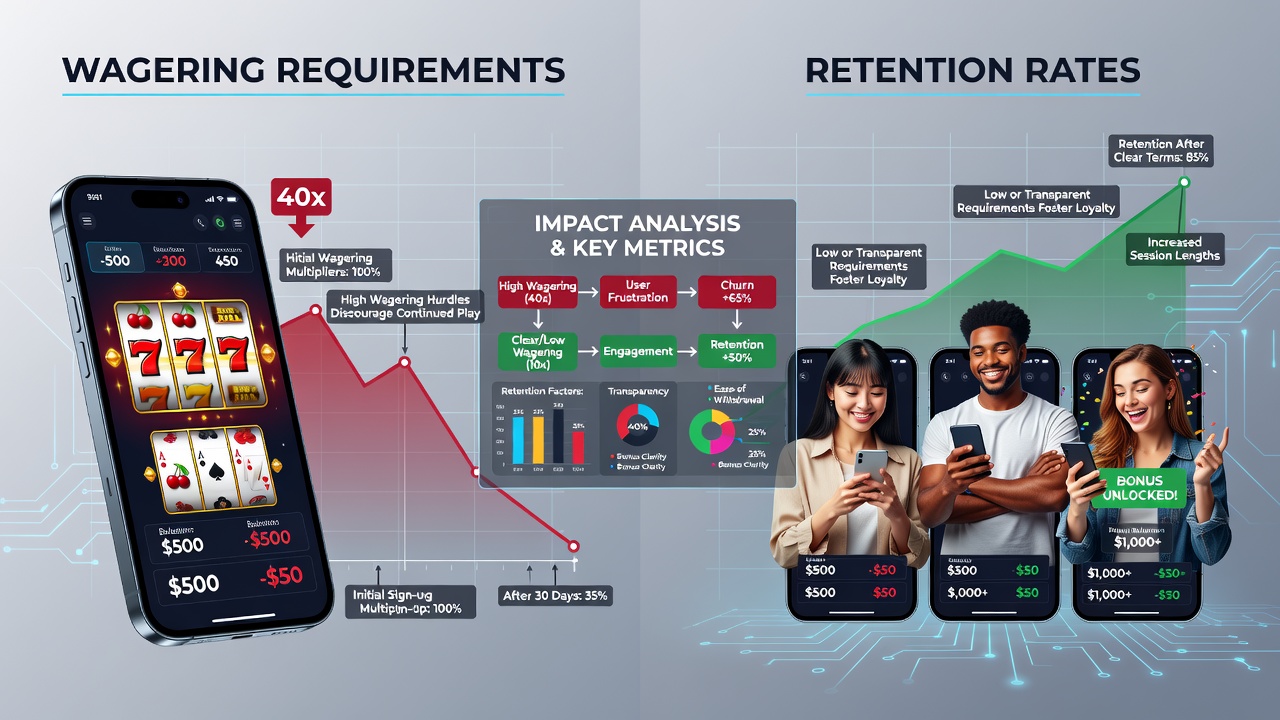
Analysts tracking mobile gambling applications note that wagering requirements continue to shape how players interact with bonus offers and how long they remain active on specific platforms, with data from app analytics firms indicating measurable differences in session frequency and account longevity tied directly to these conditions. Research from industry reports shows that players encounter these multipliers when converting bonus funds into withdrawable cash, and the structure of those multipliers often determines whether initial deposits lead to sustained engagement or quick departures. Figures from multiple markets reveal patterns where higher requirements correlate with reduced repeat activity, while moderate thresholds sometimes extend play periods through incremental progress tracking features built into apps.
How Wagering Requirements Function in Mobile Environments
Operators set wagering requirements as a multiple of the bonus amount that must be met through eligible bets before any winnings become eligible for withdrawal, and mobile applications display real-time progress meters that update after each qualifying spin or hand. These systems integrate with in-app notifications that alert users when thresholds approach completion, yet the same mechanisms also highlight remaining obligations that can stretch across dozens or hundreds of individual wagers. Data collected across European and North American markets shows that games with lower contribution percentages toward requirements, such as certain table games, extend the time needed to clear bonuses and thereby influence how frequently users open the application each week.
Developers adjust these parameters based on regional licensing rules, and studies compiled by academic researchers at institutions focused on behavioral economics demonstrate that players who perceive requirements as achievable maintain higher login rates over thirty-day windows compared with those facing steeper multiples. Mobile-specific design elements, including push reminders tied to bonus expiration dates, further modulate retention by prompting returns even when progress stalls, although analysts observe that repeated exposure to unmet targets can accelerate account dormancy once the initial deposit cycle ends.
Retention Patterns Linked to Requirement Levels
Retention metrics tracked through aggregated user data indicate that applications applying requirements between twenty and thirty times the bonus amount retain active monthly users at rates several percentage points higher than those enforcing fifty-times or greater thresholds, with the divergence becoming statistically noticeable within the first two weeks after bonus activation. Observers examining cohort behavior note that players who clear moderate requirements often transition into regular depositing patterns, whereas those confronting extended play demands show elevated churn once the bonus expires without conversion. Reports released in November 2026 from research consortia covering Asia-Pacific markets highlighted similar trends, where localized apps that lowered requirements during promotional campaigns recorded sustained increases in daily active users through the subsequent quarter.
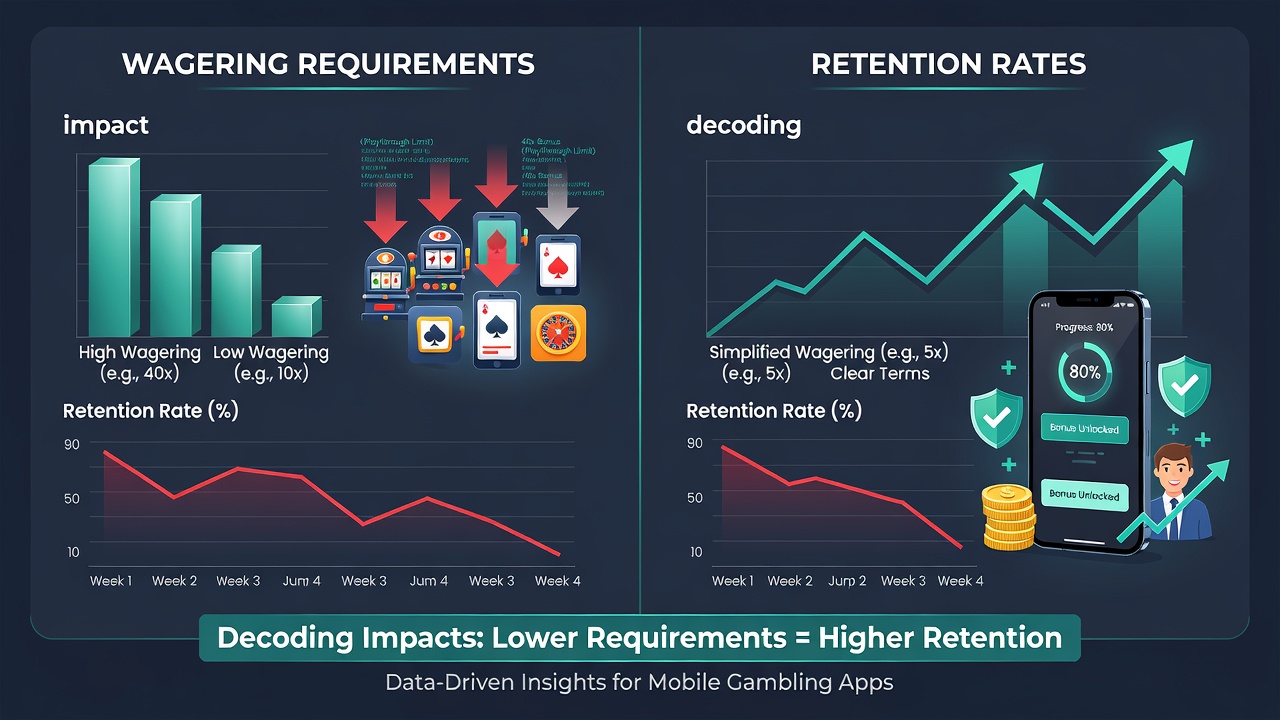
Segmented analysis of player cohorts reveals that mobile users aged between twenty-five and thirty-four respond more sensitively to requirement adjustments than older demographics, with session length data showing quicker drop-offs when progress indicators stall. Operators respond by introducing tiered bonus structures that scale requirements according to deposit size, and this approach has produced measurable retention lifts in markets where regulatory frameworks permit such flexibility. Evidence compiled by the Canadian Gaming Association points to comparable outcomes when operators align requirement levels with average bet sizes typical of mobile sessions, which tend to be smaller and more frequent than desktop equivalents.
Regional Regulatory Influences on Mobile Implementation
Licensing authorities across different jurisdictions impose varying caps and transparency rules on wagering requirements, and these differences translate into distinct retention outcomes for cross-border mobile applications. In jurisdictions where disclosure mandates require clear display of contribution rates per game type, players demonstrate higher completion rates and correspondingly longer platform tenure, according to comparative studies drawn from multiple licensing zones. Australian research centers tracking digital gambling have documented that requirements incorporating time-limited windows can compress engagement into shorter bursts, which in turn affects long-term retention when users fail to meet deadlines before the bonus lapses.
Industry organizations such as the European Gaming and Betting Association have compiled data sets showing that streamlined requirement systems paired with loyalty integrations produce steadier retention curves across mobile user bases. Meanwhile, academic papers examining North American state-level operators find that requirements exceeding forty times correlate with lower lifetime value per acquired user when measured through in-app purchase frequency. These patterns hold across both free-to-play transition models and direct real-money applications, underscoring the structural role requirements play independent of promotional volume.
Conclusion
Comprehensive examination of available metrics demonstrates that wagering requirement design directly modulates retention trajectories in mobile gambling applications through its effects on perceived achievability and progress visibility. Operators who calibrate these parameters against observed player behavior across demographic segments achieve more consistent account activity over extended periods, while regulatory variations continue to shape the specific thresholds deployed in different territories. Data gathered through November 2026 and earlier periods confirms that ongoing refinement of these mechanics remains central to sustaining user bases in competitive mobile environments.