Seasonal Payment Method Shifts and Their Effects on Promotional Activation Success in Digital Gambling Markets
Taylor Zimmermann · Oct 4, 2026
Seasonal Payment Method Shifts and Their Effects on Promotional Activation Success in Digital Gambling Markets
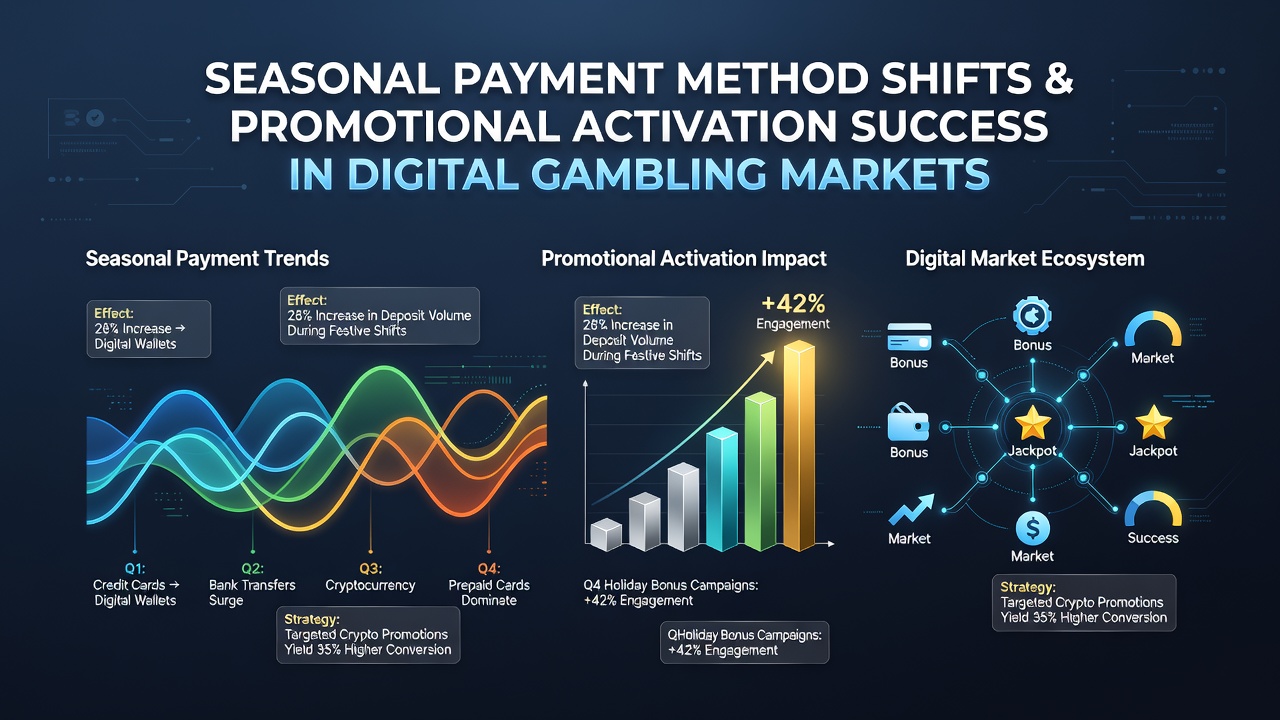
Payment preferences in digital gambling markets change with the seasons because holidays, tax cycles, and regional events alter how players fund accounts and claim promotions. Data from multiple jurisdictions show that credit card usage rises during the fourth quarter while e-wallet and cryptocurrency deposits increase in the first quarter when users seek faster processing after year-end spending. These shifts directly affect promotional activation rates since many bonuses require specific deposit methods or minimum thresholds that align with seasonal banking behaviors.
Documented Patterns in Payment Method Usage
Research indicates that European operators record higher bank transfer volumes in January because players settle holiday expenses and then move larger sums into gambling accounts. In contrast, North American markets see elevated credit card activity from October through December when retailers push card-based promotions that carry over into online deposits. Australian figures reveal a spike in digital wallet transactions during the summer months when users travel and prefer instant top-ups on mobile devices. These patterns repeat annually and create predictable windows when certain deposit types dominate transaction logs.
Operators adjust bonus structures ahead of these periods because activation success depends on matching the payment method most common at that time. A bonus tied exclusively to cryptocurrency deposits performs differently in December than in March when card usage peaks in many markets. Tracking these cycles allows platforms to time free spin offers, deposit matches, and cashback campaigns with the payment rails players already favor during each season.
How Seasonal Shifts Influence Activation Metrics
Activation success rates fluctuate when payment preferences move because promotional terms often specify eligible funding sources. When players switch to methods not covered by current bonuses, completion rates drop even if overall deposit volume remains steady. Studies from the European Gaming and Betting Association highlight that campaigns aligned with dominant seasonal methods achieve higher conversion while mismatched offers see activation fall by noticeable margins during transition months.
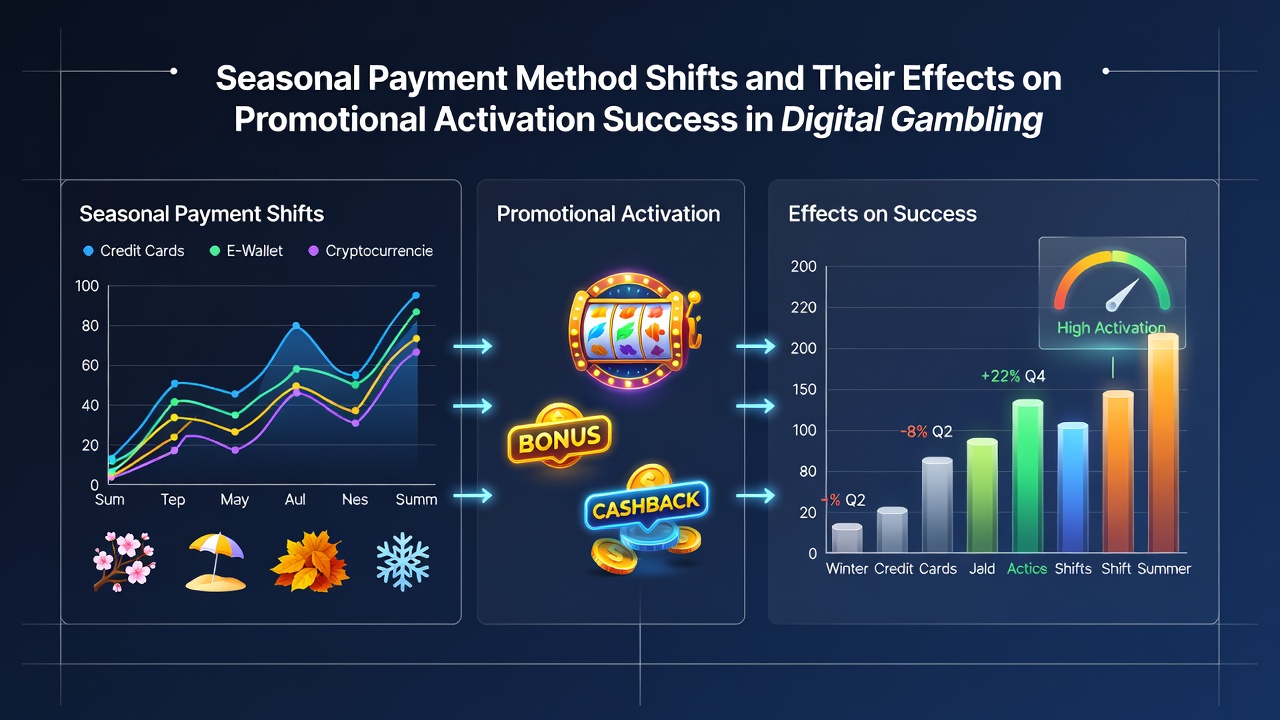
One analysis of Canadian iGaming data found that e-wallet bonuses launched in summer months captured more activations than the same offers run in winter when card deposits prevail. Operators who rotate bonus eligibility lists quarterly maintain steadier activation curves across the calendar year. Those who keep static terms experience dips precisely when players migrate to alternative rails for seasonal reasons such as tax refunds or travel spending.
Regional Regulatory Contexts and Data Sources
Regulatory frameworks in different regions shape how operators can respond to these shifts. Malta's gaming authority requires clear disclosure of eligible payment methods in all promotional materials, which forces platforms to update terms rapidly when seasonal preferences change. Ontario's Alcohol and Gaming Commission mandates separate tracking of deposit-method performance for licensed operators, generating granular datasets that reveal activation gaps tied to payment seasonality. These rules create compliance incentives for platforms to monitor and adapt to the same cycles that affect marketing outcomes.
Payment processors also publish regional usage reports that operators cross-reference with internal activation logs. The resulting datasets show that promotional success improves when eligibility rules expand or contract in line with documented seasonal flows rather than remaining fixed across quarters.
Practical Adjustments Observed in Market Data
Platforms that segment bonus campaigns by both geography and calendar quarter record more consistent activation numbers. They expand cryptocurrency eligibility during periods when tax-related spending drives users toward faster settlement options and tighten card-based offers when holiday retail activity increases card transaction volumes. This approach relies on historical transaction data rather than static assumptions about player behavior.
Reports from academic sources such as the University of Sydney's gambling research unit confirm that activation metrics track payment method availability more closely than bonus size alone during seasonal transitions. Operators using these insights time rule changes to coincide with expected shifts, which reduces friction between player deposit habits and promotional requirements.
Conclusion
Seasonal payment method shifts create measurable effects on promotional activation success because deposit preferences move in predictable patterns tied to holidays, tax cycles, and regional events. Operators who align bonus eligibility with these documented flows maintain steadier activation rates across quarters. Regulatory requirements in multiple jurisdictions further encourage ongoing monitoring of payment-method performance, which supplies the data needed to adjust terms ahead of each seasonal transition. As markets approach October 2026, historical datasets continue to guide these quarterly recalibrations.