Texas Capital Securities Adjusts Stance on Melco Resorts & Entertainment
Taylor Zimmermann · Oct 18, 2026

Texas Capital Securities Adjusts Stance on Melco Resorts & Entertainment
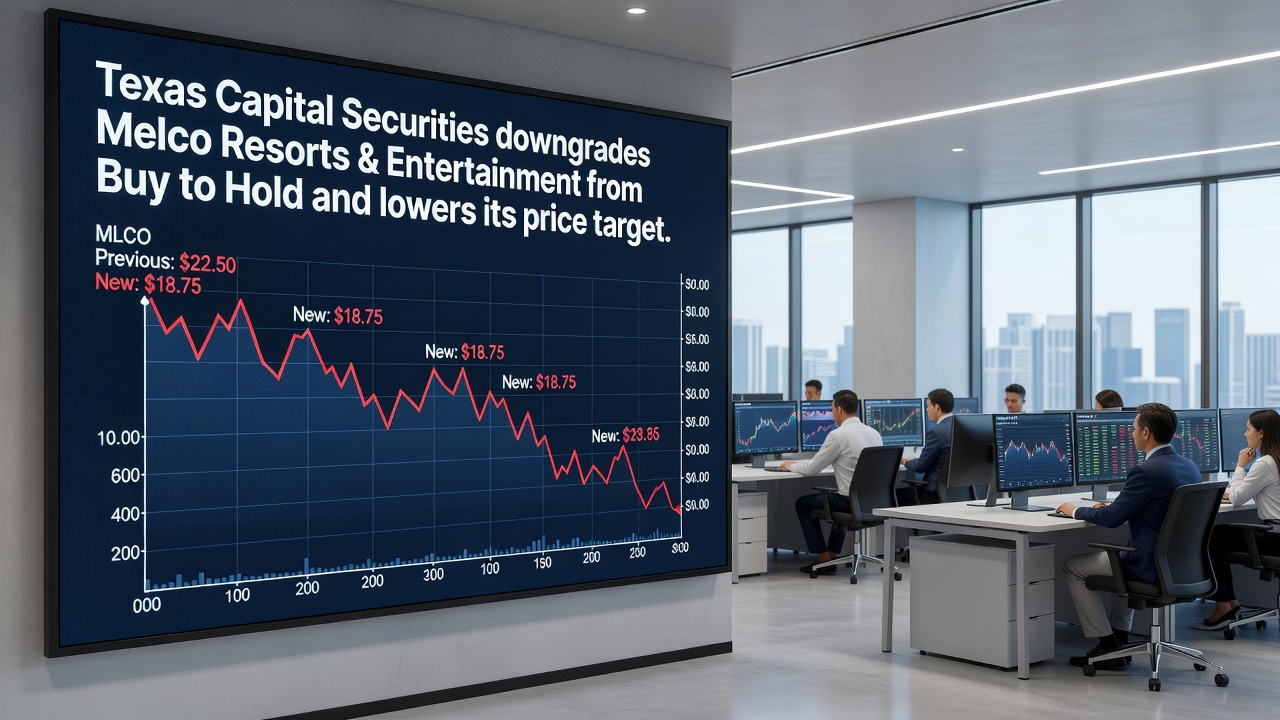
Texas Capital Securities changed its recommendation on Melco Resorts & Entertainment from Buy to Hold while cutting the price target from $8 to $5.50, and the adjustment rested on three main considerations that analysts highlighted in their note. Weak gross gaming revenue trends across Macau formed one pillar of the decision, variance between the firm's own EBITDA projections and broader consensus estimates created another point of concern, and the introduction of a 20 percent Chinese tax on offshore trust assets added further pressure to the outlook. Shares of the company trading under the ticker MLCO on NASDAQ moved lower immediately after the announcement, extending a decline that has already stretched across the preceding twelve months.
Details of the Rating Change
The brokerage firm issued its updated view in a report that reached investors during regular market hours, and the move reflected a recalibration of expected returns rather than any abrupt shift in company fundamentals. Melco Resorts & Entertainment operates multiple casino properties in Macau, the world's largest gambling market by revenue, so any revision to growth assumptions tends to draw attention from institutional holders. Observers note that downgrades of this type often coincide with periods when revenue visibility remains limited, yet the specific combination of factors cited here stood out in the coverage that followed the release.
Factors Cited by the Analyst Team
Macau gross gaming revenue has shown uneven patterns in recent reporting periods, with monthly figures sometimes falling short of earlier expectations and operators facing persistent competition for high-roller traffic. Texas Capital Securities pointed to these trends as a reason to temper near-term forecasts, and the same report flagged differences between its EBITDA modeling and the averages compiled from other research providers. The new 20 percent tax on offshore trust assets, implemented by Chinese authorities, introduces an additional layer of cost for certain wealth structures that historically supported VIP play, and analysts incorporated that change into their revised valuation framework. Each element received separate discussion in the note, allowing readers to weigh their individual and collective impact on the target price.
Share Price Movement and Historical Context
Following the downgrade, MLCO shares declined during the session and closed lower than the previous day's level, continuing a pattern of downward movement that began more than a year earlier. Market data showed volume remaining within normal ranges, indicating that the reaction stayed measured rather than disorderly. Over the longer term, the stock has traded well below levels seen prior to the extended decline, and the latest analyst action reinforced existing caution among some participants. Those monitoring the name have watched similar adjustments from other firms in prior quarters, yet the timing of this particular note aligned with ongoing softness in regional revenue reports.
Implications for Macau Operators
Broader pressure on casino companies based in Macau stems from multiple macroeconomic adn regulatory influences that have accumulated over recent years, and the Texas Capital Securities commentary touched on several of those dynamics without introducing new data points. Operators continue to navigate slower recovery in certain customer segments, while policy changes originating from mainland China affect both capital flows and tax treatment. The 20 percent levy on offshore trusts represents one such policy update, and its inclusion in the downgrade rationale illustrated how external fiscal measures can feed directly into equity research models. Companies in the sector have responded with cost controls and adjusted marketing approaches, though results have varied depending on property location and customer mix.
Conclusion
The downgrade by Texas Capital Securities provides a clear snapshot of how one research provider weighed current revenue trends, earnings estimate gaps, and tax policy shifts when reassessing Melco Resorts & Entertainment. Shares reacted with an immediate decline that added to an already lengthy downward trajectory, and the episode underscores the sensitivity of Macau-focused gaming stocks to both operational metrics and regulatory developments. Market participants will continue to track subsequent earnings releases and monthly gross gaming revenue figures for further signals on whether the pressures cited in the note persist or ease over time.